# THE MOUNTAIN THEY STOLE
## An GACN Investigative Series
—
### Part 2: The Paper Trail of Betrayal
*For more than fifty years, the Wapichan people have waited for the State to recognize what they never left. A review of the documents shows a pattern of delay so systematic it can only be called a strategy.*
—
**GEORGETOWN / AISHALTON** – In the Toshao’s office in Aishalton Village, there is a metal cabinet that holds the collective memory of a struggle. Inside are letters, maps, meeting minutes, and formal applications—decades of paper that trace the Wapichan people’s pursuit of legal recognition for lands they have occupied since long before Guyana existed as a nation.
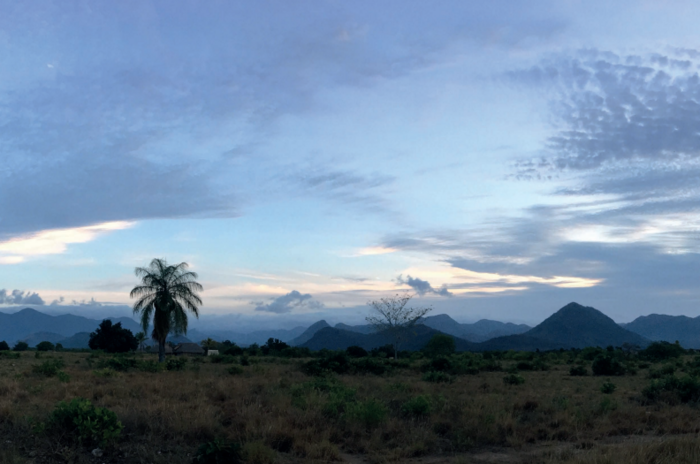
At the center of that pursuit is Marudi Mountain, known in the Wapichan language as Marutu Taawa. For the Wapichan, it is the “First Village”—the origin point of their clan, a sacred landscape dotted with ancient petroglyphs, burial grounds, and ceremonial sites. For the State, it has been treated as a commodity: first as timber, then as gold, and now as a lawless frontier where transnational criminal networks operate with impunity.
The gap between these two realities did not emerge overnight. It was constructed, piece by piece, through a half‑century of administrative delay, broken promises, and a legal strategy that has allowed mining to proceed while Indigenous land claims are left in permanent limbo.
—
### 1965: The First Petition
The documentary trail begins in 1965, when Wapichan leaders submitted their first formal petition to the colonial British Guiana government. The request was simple: recognize the boundaries of Wapichan traditional territory, including Marudi Mountain, and secure it against encroachment by ranchers, loggers, and miners.
That petition, like those that followed, was acknowledged and then shelved.
After independence in 1966, the new Guyanese government inherited the unresolved claims. For decades, Wapichan leaders were told that the State lacked the resources or the legal framework to address Indigenous land rights comprehensively. Meanwhile, mining concessions were granted on lands the Wapichan had claimed as their own.
—
### 2006: The Amerindian Act – A Promise of Reform
The passage of the Amerindian Act 2006 was hailed as a turning point. For the first time, Guyana had a comprehensive legal framework recognizing Indigenous land rights. The Act established mechanisms for villages to apply for “extensions” to their titled lands, allowing them to reclaim territories they had traditionally used and occupied but had never been formally recognized.
Aishalton Village saw this as their long‑awaited opportunity. Over the next decade, community leaders worked with the South Rupununi District Council (SRDC) to document their traditional territory, gathering oral histories, mapping sacred sites, and compiling the evidence required for an extension application.
But the promise of the Amerindian Act was undercut by implementation delays, bureaucratic inertia, and a government that continued to issue mining permits on lands under active Indigenous claim.
—
### 2019–2020: The Formal Application
In 2019, Aishalton Village finalized its application for a village extension. The application explicitly listed Marudi Mountain as part of the territory to be recognized. The village was led at the time by **Toshao Michael Williams**, who shepherded the application through years of community consultation and documentation.
The application was formally submitted to the Ministry of Amerindian Affairs in 2019–2020. Under the Amerindian Act, the Ministry has a duty to process such applications in a timely manner and to consult with villages before granting any concessions on disputed lands.
More than six years later, the application remains pending.
No decision has been made. No formal denial has been issued. The application simply sits—in legal limbo—while the landscape it sought to protect is transformed by mining.
—
### The Strategy of Delay
GACN’s investigation has found that the government’s failure to resolve the Aishalton extension is not a matter of simple bureaucratic backlog. It is a pattern that appears designed to achieve a specific outcome: allowing mining to proceed without the legal obligation to consult Indigenous communities.
Under the Amerindian Act 2006, once a village extension application is submitted, the government has a clear obligation. Section 41(1) of the Act requires the State to consult with affected villages before granting any concessions for mining, logging, or other resource extraction within the claimed area.
By leaving the application pending indefinitely, the government has created a legal gray zone. Officials can argue that no final decision has been made, and therefore the land remains “State land” subject to licensing. Yet the very purpose of the extension process—to resolve competing claims before resource extraction begins—is defeated.
The result is that while Aishalton waits, mining permits are issued, illegal operations multiply, and the mountain is irreversibly altered.
—
### The 2021 Mining Deal: A Breaking Point
In 2021, the South Rupununi District Council publicly condemned a mining deal for Marudi that had been negotiated without any consultation with the village or the district council. The deal was made despite the government’s full knowledge of Aishalton’s pending extension application.
The SRDC’s statement was blunt: the government had violated the spirit and letter of the Amerindian Act, as well as international standards on Free, Prior, and Informed Consent (FPIC).
The condemnation made headlines, but the underlying issue remained unresolved. The government did not halt the deal. It did not process the extension application. It did not initiate the consultation required by law.
Instead, the application remained pending—and mining continued.
—
### Legal Violations: Domestic and International
The government’s handling of the Aishalton extension constitutes multiple violations of Guyanese law and international obligations.
**Domestic Law Violations**
| Instrument | Provision | Violation |
|———–|———–|———-|
| Amerindian Act 2006 | Section 41(1) | Failure to consult Indigenous communities before granting concessions on disputed lands |
| Amerindian Act 2006 | Sections 38–39 | Failure to process village extension application in a timely manner |
| Constitution of Guyana | Article 149G (Right to Culture) | Failure to protect Indigenous cultural heritage, including sacred sites and petroglyphs |
| Environmental Protection Act 1996 | Sections 11, 14, 35 | Granting of permits without required environmental assessments and consultation |
**International Law Violations**
| Instrument | Provision | Violation |
|———–|———–|———-|
| UN Declaration on the Rights of Indigenous Peoples (UNDRIP) | Articles 10, 11, 26, 29 | Right to Free, Prior, and Informed Consent (FPIC); right to cultural integrity; right to lands traditionally occupied; right to environmental protection |
| ILO Convention 169 (Convention concerning Indigenous and Tribal Peoples in Independent Countries) | Articles 6, 7, 14, 15 | Obligation to consult Indigenous peoples; right to decide development priorities; right to land ownership; right to natural resource participation |
| Inter-American Court of Human Rights | *Saramaka People v. Suriname* (2007) | Binding precedent requiring FPIC for large‑scale development projects on Indigenous lands; Guyana, as an OAS member, is obligated to follow this jurisprudence |
| American Declaration on the Rights of Indigenous Peoples | Articles XXIII, XXV, XXIX | Right to lands and resources; right to consultation and consent; right to cultural integrity |
—
### The Cost of Delay
For the Wapichan people, the government’s delay is not an abstraction. It has concrete, measurable consequences.
While the application sits pending:
– Sacred petroglyphs are believed to have been destroyed by mining operations.
– Ancient burial grounds and ceremonial sites have been damaged or desecrated.
– Creeks that once provided clean drinking water are contaminated with mercury and sediment.
– Illegal miners, gun runners, and human traffickers have established a permanent presence.
– Indigenous women and girls have been subjected to sex trafficking in mining camps.
Each day the application remains unresolved is a day the State fails to uphold its legal obligations and the Wapichan people are denied the protection the law promises.
—
### The Toshao’s Testimony
Michael Williams, who was Toshao when the application was submitted, described the frustration of watching the government stall while the mountain is destroyed.
“We followed every rule,” Williams said. “We documented our history. We mapped our sacred places. We submitted our application years ago. And what do we get? Silence. Meanwhile, miners come in with helicopters and guns, and the government acts like they don’t see it.”
“They ask us to prove we belong to the mountain. We have proven it for generations. How many more years must we wait for the government to do what it promised?”
—
### A Pattern Across Guyana
Aishalton is not alone. Across Guyana, Indigenous villages report similar experiences: extension applications that linger for years without decision, while mining and logging concessions are granted on disputed lands.
The effect is to place Indigenous communities in a permanent state of legal insecurity. They cannot develop their lands, they cannot exclude outsiders, and they cannot rely on the State to enforce their rights—because the State itself refuses to resolve the fundamental question of ownership.
The Aishalton extension application has become a test case. If the government can hold it in limbo indefinitely, then no Indigenous territory in Guyana is secure.
—
### What the Law Requires
The legal path forward is clear. The government must:
1. **Issue a formal decision** on Aishalton’s extension application. If granted, Marudi Mountain falls under Indigenous jurisdiction. If denied, the State must provide a legal justification that can be challenged in court.
2. **Suspend all mining activities** within the claimed extension area pending the resolution of the land claim.
3. **Honor the obligation to consult** under the Amerindian Act and international law, ensuring that no further concessions are granted without the Free, Prior, and Informed Consent of the affected Indigenous communities.
4. **Provide a public accounting** of why the application has been delayed for more than six years and what steps will be taken to prevent such delays in the future.
—
### Conclusion
The paper trail of betrayal spans five decades. From the 1965 petition to the 2021 SRDC condemnation to the pending application that still gathers dust in a ministry cabinet, the story is one of broken promises and administrative delay weaponized against Indigenous rights.
Marutu Taawa is not just a mountain. It is the heart of the Wapichan people. And for half a century, the State has treated that heart as a resource to be extracted rather than a heritage to be protected.
The documents are clear. The law is clear. The only thing missing is the will to act.
—
**Guyana Anti-Corruption Network (GACN)**
*Investigating corruption, defending transparency, upholding the rule of law.*
—
Leave a Reply